Return on investment and the cost of inaction
A bid lost on a pass or fail question is a contract never scored. A certificate that lapsed the week before submission, a policy nobody could find, an answer rewritten from scratch for the fifth time: each is a cost that grows quietly until it costs a contract. Here is what changes, and what it is worth on your own figures.
On your own figures
The starting figures are illustrative, for a small bid team. Replace every one with yours: nothing here is a claim about your business, and nothing is sent anywhere.
Writing time freed each year
144 hours, worth £6,480
12 bids × 40 hours × 30% re-used, at £45 an hour. Time to redeploy to more bids or better answers, not a budget saving.
Contract value at stake each year from avoidable pass or fail failures
£37,500
1 bid × 25% win rate × £150,000: the contract value those bids would have been expected to win had they been scored.
Each year, after the subscription
£6,480 in time, and £37,500 of contracts back in play
Time freed less the subscription. The contract value is shown apart: it is revenue at stake, not money saved, and it is never added to the time.
How the value arises
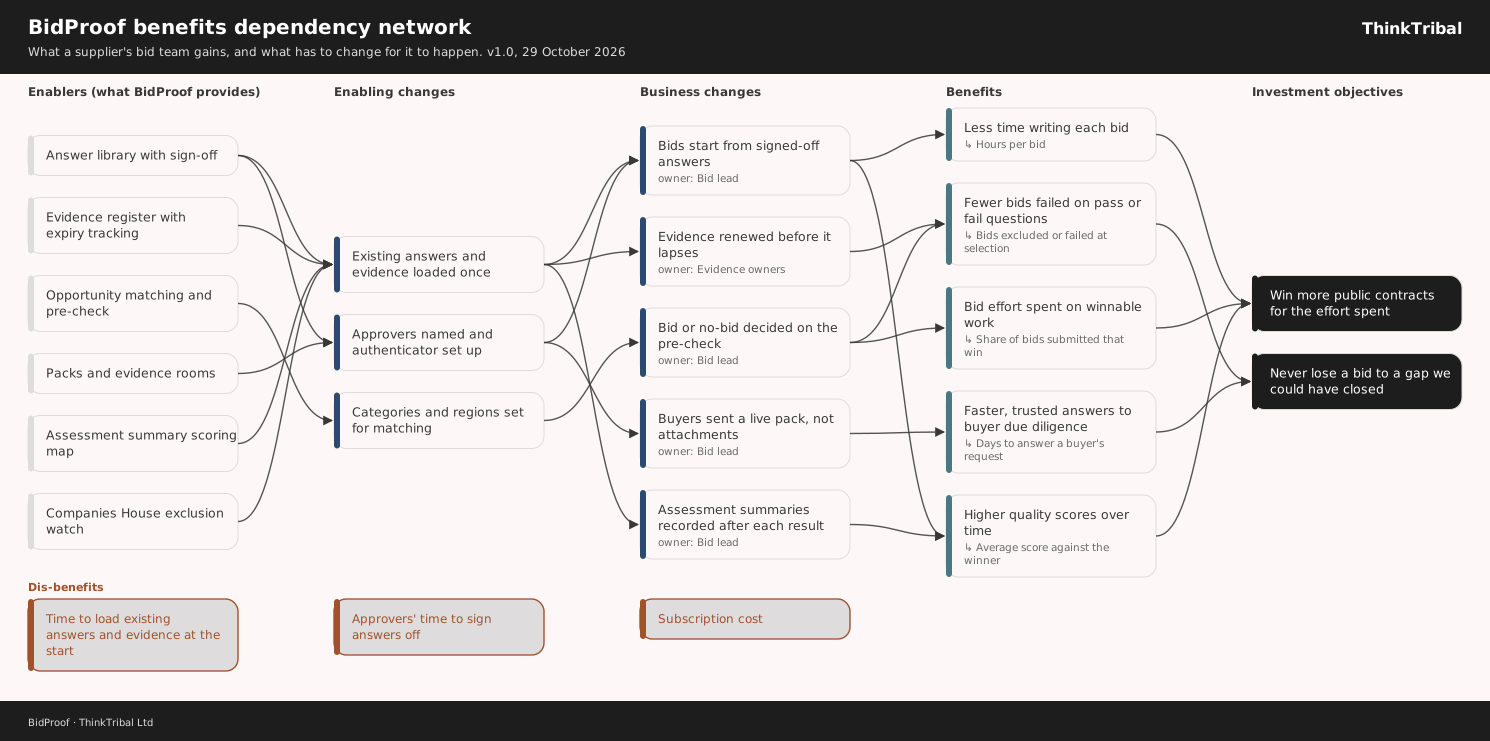
BidProof does not deliver the benefit on its own: each one depends on a change in how the bid team works, and each change has an owner. Read left to right, from what BidProof provides to the objectives it serves.
What it costs you
- Time to load what you already have
- Your existing answers and evidence are loaded once, at the start. Most teams do it over the first week.
- Approvers' time
- Someone who stands behind each answer has to read and sign it off. Bulk sign-off keeps that to one sitting.
- The subscription
- Entered in the calculator, so the result is net of it.
How you will know it is working
Each benefit has a measure you can read in BidProof itself: hours per bid from your own records, bids failed at selection on the Bids page, the share of submitted bids won, and your average score against the winner from the assessment summaries you record. Take a reading before you start, so the change is measured against where you were.